
A first-time buyer used an SBA 7(a) loan of about $1.3M and 10% down to buy two UPS Store locations that sat inside a larger operator's combined tax return, and locked in 7.75% fixed.
A first-time buyer came to me wanting to buy two UPS Store locations from a larger multi-unit operator. He had already talked with a couple of lenders before we connected.
From my first look, I could tell it was a strong deal. He had a strong personal financial statement and enough savings for a 10% down payment, with a rainy-day fund left over after closing. He was willing to go all in and pledge his house, which had quite a bit of equity. And he had management experience, so he knew how to manage a team.
The brand helped too. The UPS Store has a really good reputation, and a lot of SBA lenders really like doing UPS Store deals. I figured we'd find lenders who would like this one and get aggressive on rate and terms for him.
The two stores didn't have tax returns of their own. They sat inside the seller's bigger company, on one consolidated return. A lender wants to see the cash flow of the business you're buying, not of a company several times its size.
After approval, a second challenge showed up. The franchise transfer process ran for months, and partway through it there was a staffing change on the lender's side. With a long gap between approval and closing, that raised the risk of details slipping through the cracks.
Our team built the financial projections and a business plan for the purchase. I put together the loan package and introduced him to the lender.
To get around the missing store-level returns, I leaned on two sources. The UPS Store's internal franchise reporting is very detailed, so we could see revenue for each store. The seller also had financials that broke out each location. Then we checked both against the combined tax return. If a store showed labor at about 30% of revenue, I wanted to see the consolidated return come in at about 30% too. In other words, the labor cost and all the other expenses for the two stores had to line up with the whole group on the tax return. They did, and the lender got comfortable. The lender also asked for longer lease terms and estimates for store refreshes before approval.
The structure was simple: an SBA 7(a) loan of about $1.3M plus his 10% down. No seller note.
I went straight to the lender with the lowest SBA rate I could find, and they offered a rate fixed for five years. Once I had their term sheet, I checked with a couple of other lenders to see if they could compete on rate. They couldn't, so there was no point shopping it around for more term sheets.
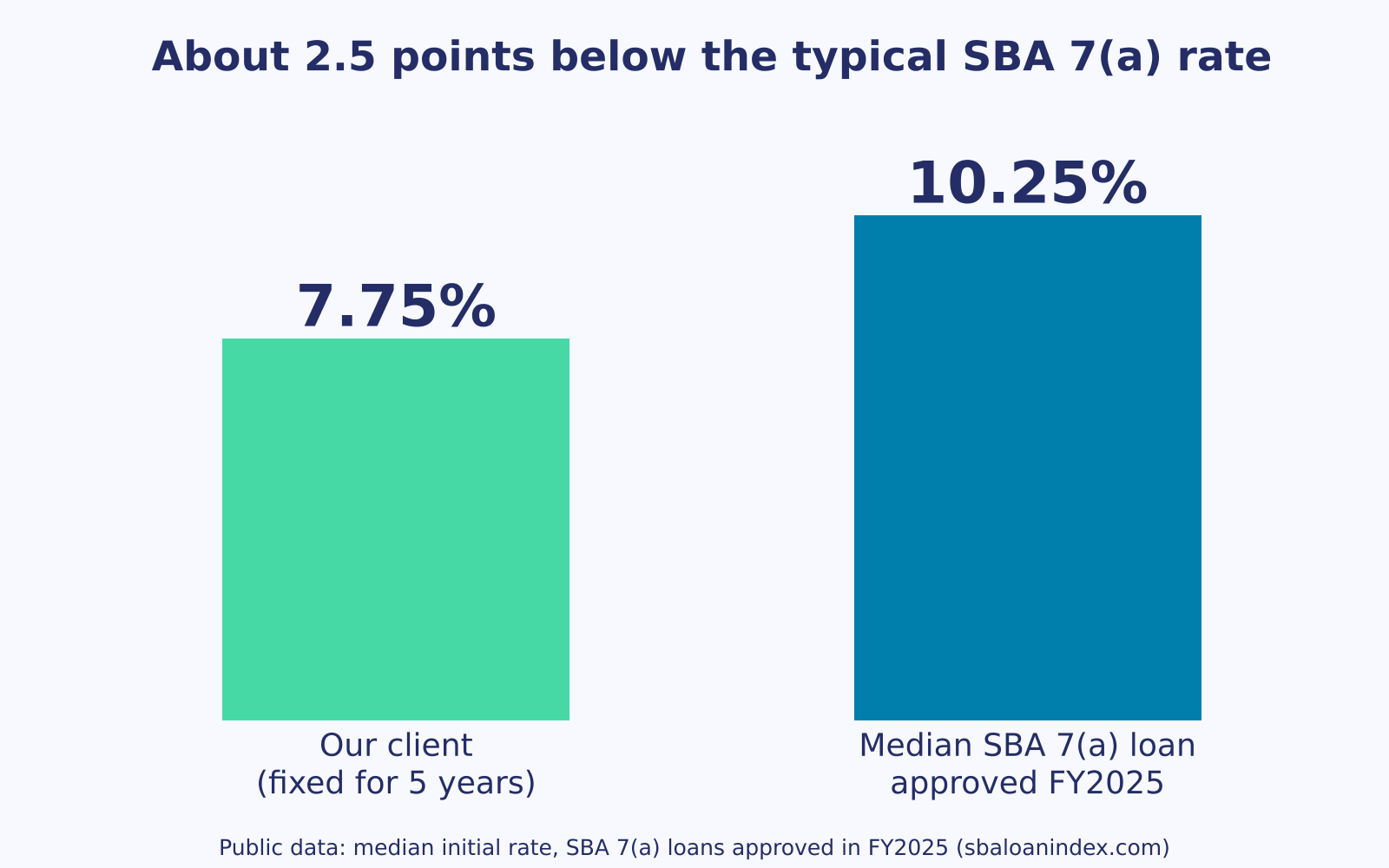
The final rate was 7.75%, fixed for five years. For context, the median SBA 7(a) loan approved in fiscal 2025 started at 10.25%.
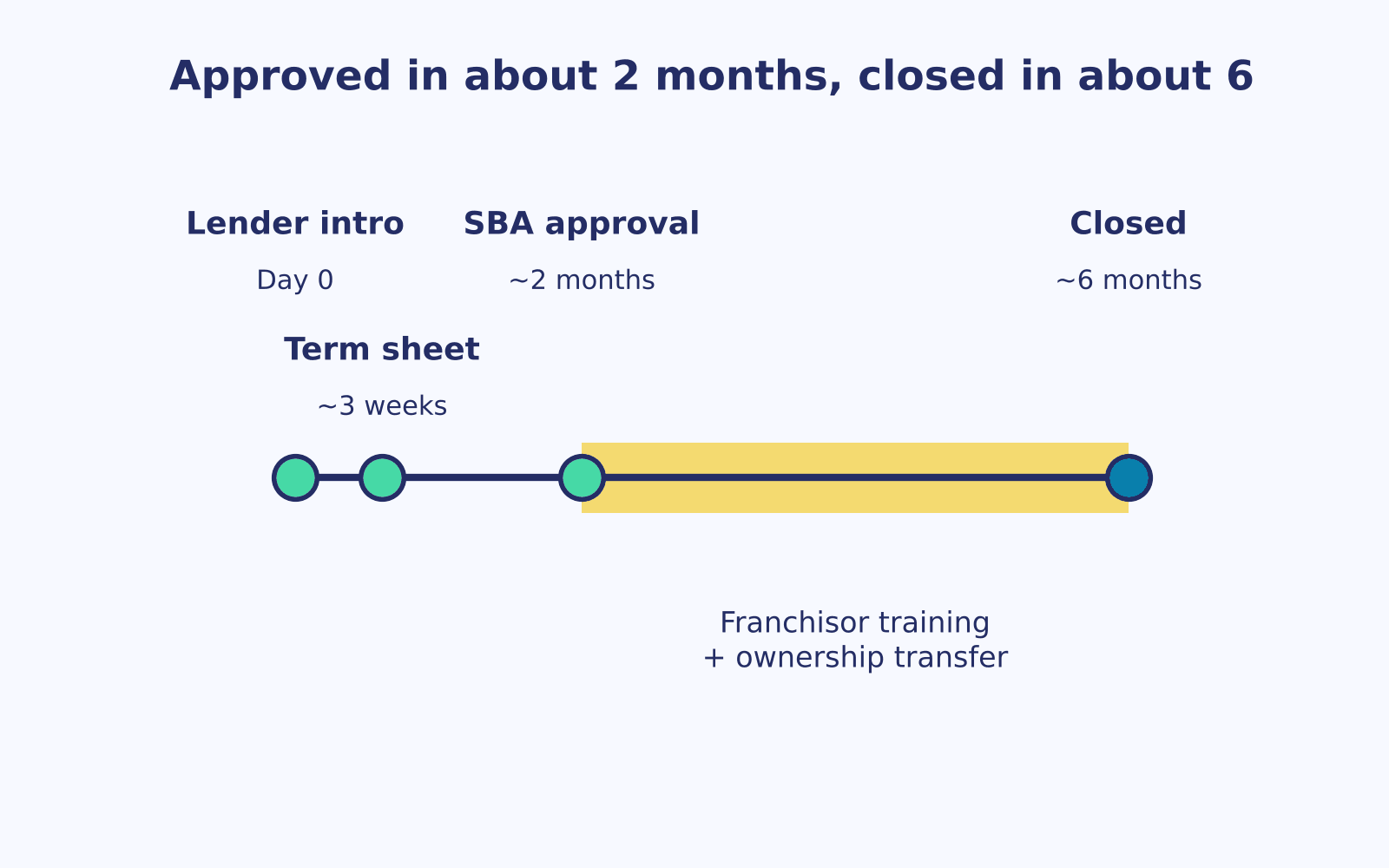
The loan was approved about two months after I introduced him to the lender. Then came the wait. UPS Store acquisitions take forever. The franchisor takes its time approving a transfer, and its process doesn't really start until the buyer has a lender commitment. Once he had approval, training was scheduled about two months out, and the transfer paperwork took more time after that.
In the last week, a closing date slipped when last-minute document requests came in during the lender's staff transition. This is where being a loan broker paid off. I still had a good relationship with my original contact, so I reached out and asked for help getting the right people moving. That got the ball rolling, and the bank closed the deal quickly from there. My client closed two days after the missed date and was in his stores the next day.
Have questions about your own deal?
If you're looking at buying a franchise location or working through an SBA loan of your own, reach out to me directly at adam@projectionhub.com.

Adam will review your deal before you talk to lenders and tell you honestly what lenders will flag. No cost.
Get a free SBA review